Flipper One project needs community help to build open Linux platform
Flipper Devices, the maker of the Flipper Zero pentesting tool, is asking the community to help build Flipper One, an open Linux platform for connected devices.
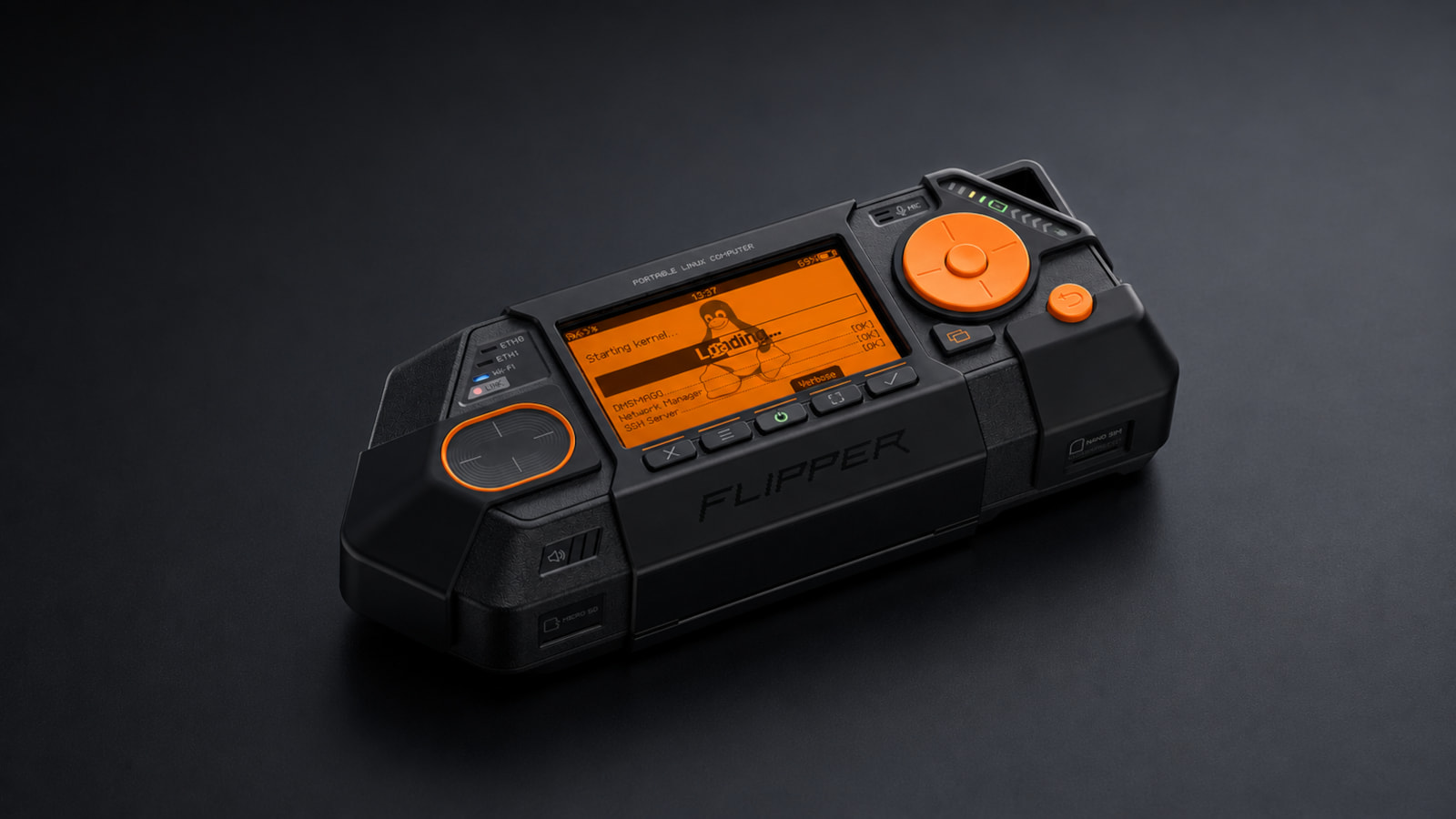
Unlike Flipper Zero, which focuses on offline access control and radio technologies such as NFC, RFID, infrared, and sub-GHz communications, the Flipper One project is designed as a high-performance, Linux-based platform for networking and hardware experimentation, with sufficient processing power to support SDR (software-defined radio) analysis and local LLMs.
The company underlines that One, which is a portable ARM Linux computer, shouldn’t be seen as an upgrade to Flipper Zero, but rather “a completely different project with its own goals.”
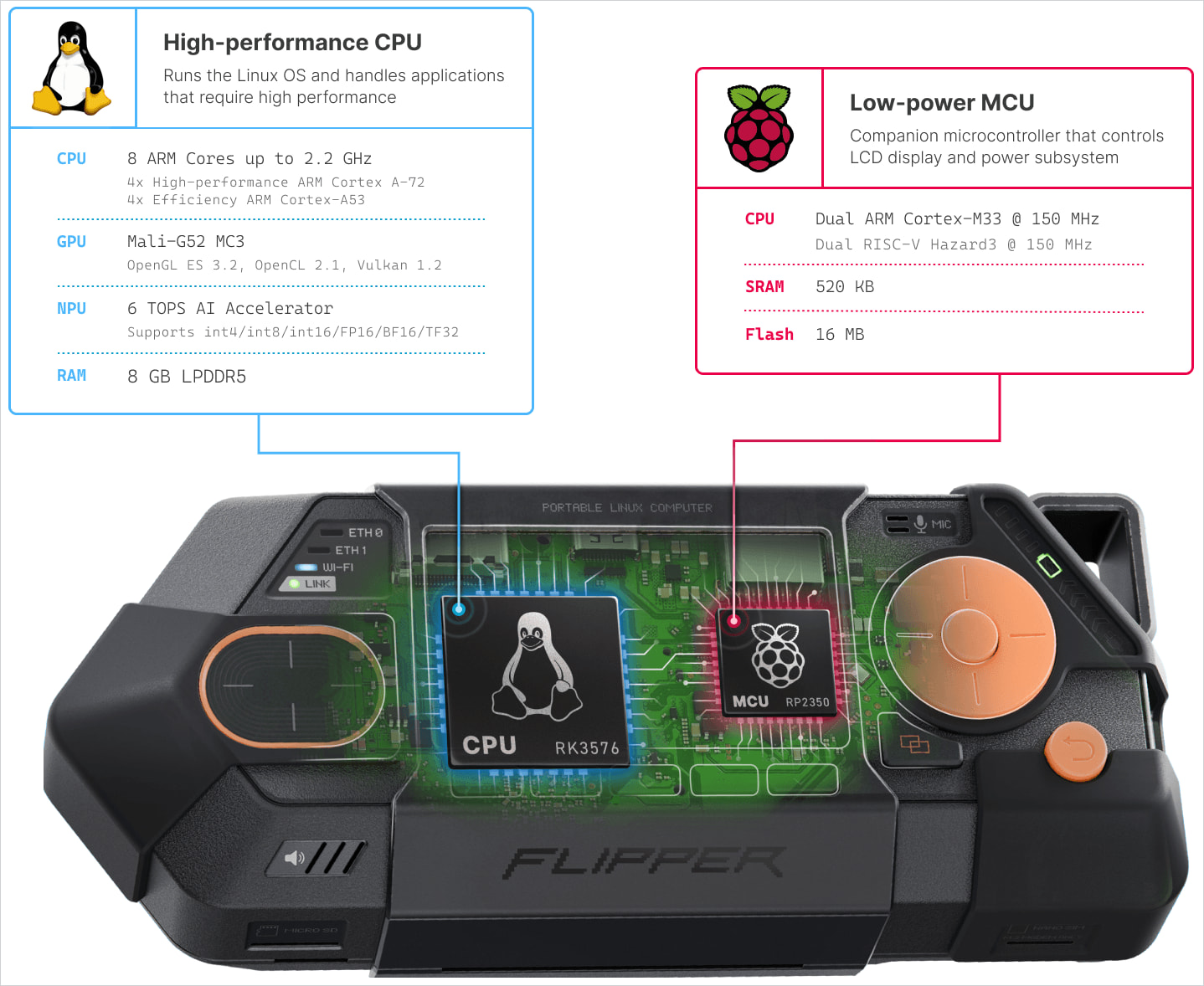
Hardware-wise, Flipper One is built around the Rockchip RK3576 ARM SoC with 8 GB RAM, paired with a Raspberry Pi RP2350 microcontroller in a dual-processor architecture.
The main CPU handles Linux workloads while the MCU independently manages the display, power subsystem, buttons, and boot process. This also practically means that the device remains operational even when the OS is powered off.
Source: Flipper Devices
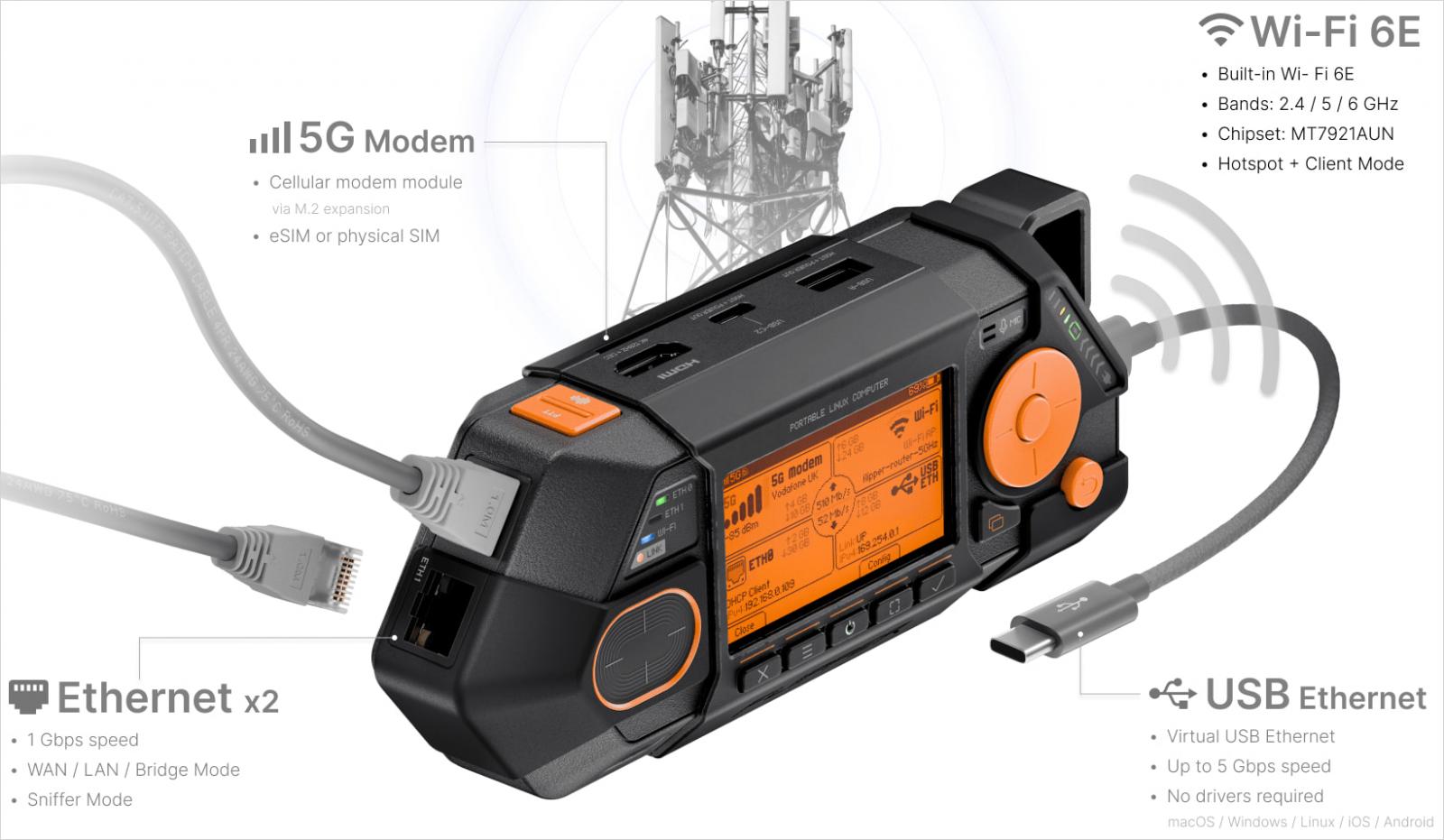
Flipper One is also intended to be modular, with support for M.2 and GPIO interfaces, as well as for PCIe, USB 3.1, SATA, UART, I2C, and SIM. This allows adding SDRs, SSDs, Wi-Fi cards, AI accelerators, and 5G or NTN satellite modems.
“You can use Flipper One as a router, a VPN gateway, or a bridge between wired and wireless networks,” Flipper Device says in the announcement today. However, the device could also work as a portable Linux workstation (“survival desktop”), TV media box, and HDMI support.
Call for help and participation
Flipper One has been under development for years, but the project turned out to be a much more difficult challenge than the vendor expected, with several teams working on various aspects of the project: hardware, mechanics, software development for the RK3576 processor, MCU firmware, user interface, documentation, and testing.
“It’s an incredibly hard project, both economically and technically,” Flipper Devices says, adding that anyone can pitch in. “Whether you’re an engineer, software developer, designer, or simply an enthusiastic user with ideas to share, you’re welcome to participate in development and help shape Flipper One.”
The major hurdles the team faces right now are:
- Achieving full mainline Linux support for the RK3576 SoC and removing remaining proprietary components and vendor dependencies.
- Developing and upstreaming the custom dual-processor CPU/MCU architecture and its interconnect drivers.
- Building Flipper OS and the FlipCTL framework to create a new small-screen Linux user experience.
- Resolving hardware compatibility issues involving USB-C DisplayPort Alt Mode, H.264/HEVC hardware encoding, and Wi-Fi analysis features.
- Supporting advanced capabilities like satellite connectivity and offline AI through unfinished software support and external partnerships.
“The current state of ARM Linux is depressing. Every vendor bolts on their own custom mess: closed boot blobs, vendor-specific patches, “board support packages” that nobody outside the chip maker can really understand,” explains Flipper Devices.
Currently, Collabora is helping the project to add full support for the Rockchip RK3576 SoC into the mainline Linux kernel, which Flipper Devices says is progressing well.
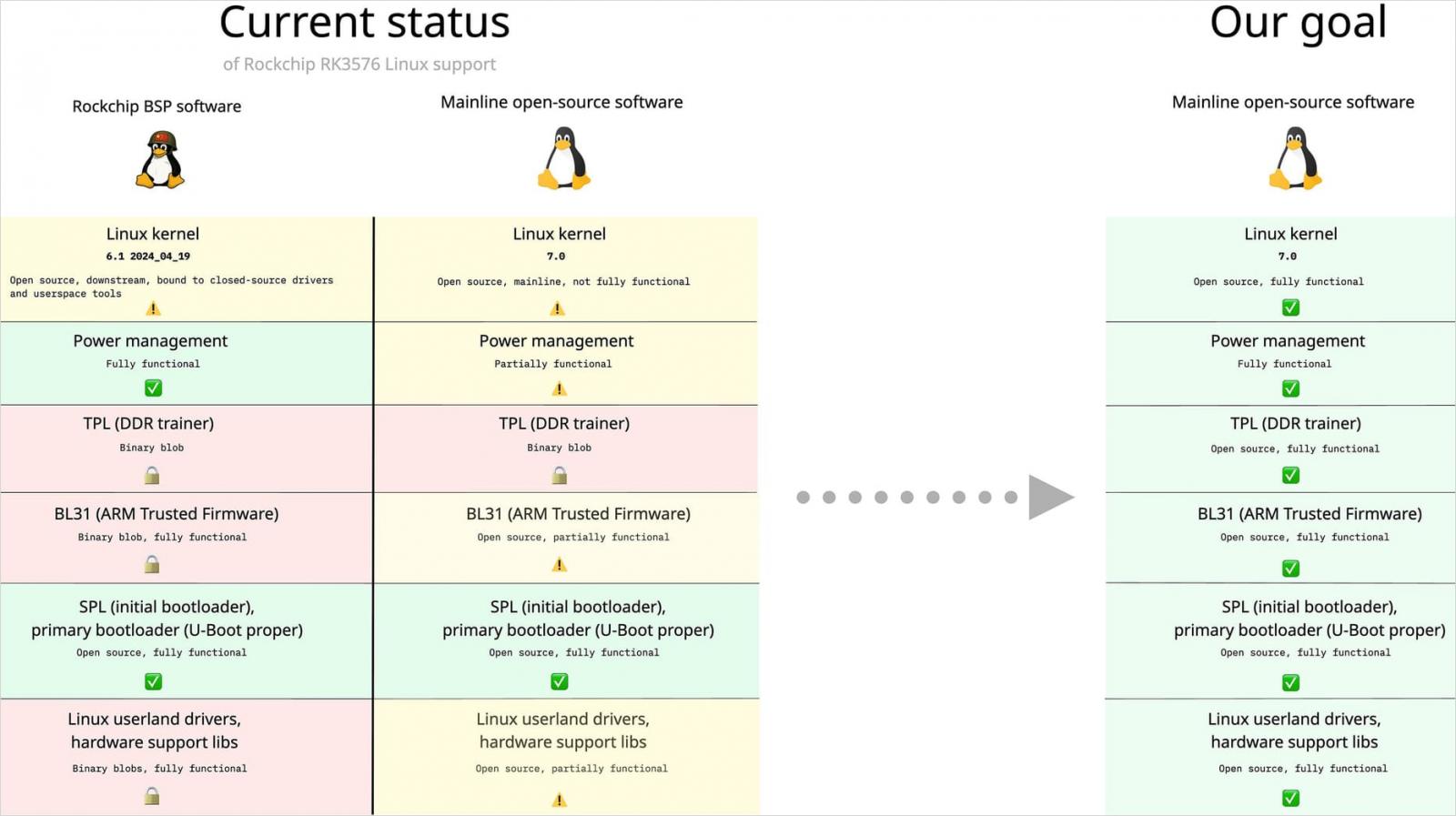
Source: Flipper Devices
Flipper One is an active development project, far from a finished or shipping product. The prototypes Flipper Devices is working on have unfinished parts, some core software support is missing, and architectural decisions remain unresolved.
“There’s a lot of uncertainty in this project, along with technical challenges and financial risks (like the current RAM chip crisis),” stated Pavel Zhovner, Flipper Device founder, adding that the company will try its best to deliver the product.
Updates on the project’s progress will be periodically shared via Flipper’s R&D profile on social media.

Automated pentesting tools deliver real value, but they were built to answer one question: can an attacker move through the network? They were not built to test whether your controls block threats, your detection rules fire, or your cloud configs hold.
This guide covers the 6 surfaces you actually need to validate.