
Google Chrome Begins Preparing Global Privacy Control Support
Google has created a new Chrome Platform Status entry for Global Privacy Control (GPC). That entry shows Google Chrome and the wider Chromium project are preparing to support a browser-level privacy signal with legal weight under California law.
When enabled, Global Privacy Control lets a browser automatically tell websites not to sell or share a user’s personal data.
The entry does not list a release date or testing milestone. Even so, it aligns with California privacy rules that already recognize Global Privacy Control as a valid opt-out signal and, from 2027, will require browsers used in the state to offer a built-in way to send it.
GPC works at the browser level. Once it is turned on, the browser sends an opt-out signal to websites automatically. Users do not need to interact with cookie banners or repeat the same choice on every site.
This sets GPC apart from earlier privacy signals that relied on voluntary cooperation.
Chrome already supports Do Not Track (DNT), but it was never backed by law. Websites could ignore it, and many did. Mozilla Firefox removed DNT and now offers a Global Privacy Control opt-in setting instead. GPC is recognized under California privacy law, while DNT was not.
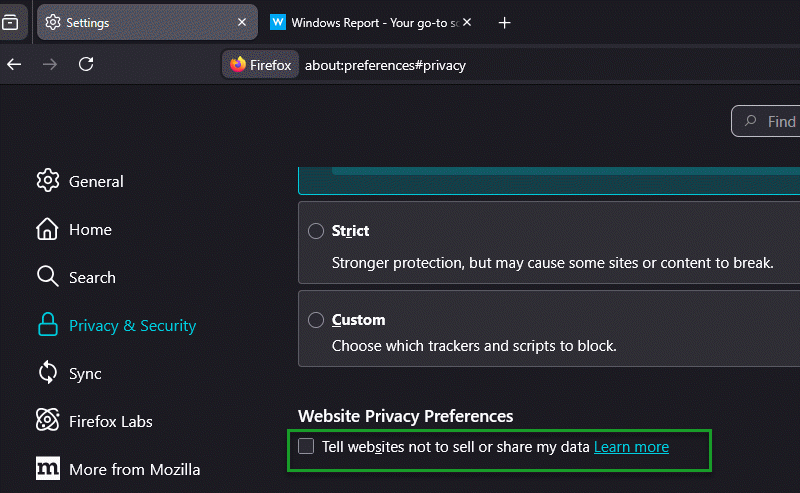
Chrome catching up on Global Privacy Control
Chrome’s planning entry, spotted by WindowsReport, confirms alignment with the official W3C Global Privacy Control specification. The work includes:
- A user preference to enable GPC
- Sending the Sec-GPC header with web requests
- Exposing the signal through navigator.globalPrivacyControl
This places Chrome on the same path Firefox and other privacy-focused browsers took earlier.
The Chrome Platform Status page labels this work as “Chromium catches up.” There are no flags, no Canary versions, and no shipping target listed.
The future of Do Not Track in Chrome
Chrome’s work on Global Privacy Control also raises the question of the future of Do Not Track inside the browser.
DNT remains available in Chrome today, even though it lacks legal relevance. By contrast, GPC is tied to opt-out rights that the law already enforces.
Chrome’s Platform Status entry does not mention DNT or outline any related changes. For now, it only documents work to add GPC support. Any decision about how Chrome handles DNT alongside GPC is not described in the current plans.
Privacy advocates are likely to question Google’s intent, given its role in online advertising. This is not a feature announcement. It is a directional signal.
Readers help support Windows Report. We may get a commission if you buy through our links.

Read our disclosure page to find out how can you help Windows Report sustain the editorial team. Read more