Vertical Tabs Are Finally Making Their Way to Chrome
Readers help support Windows Report. We may get a commission if you buy through our links.

Read our disclosure page to find out how can you help Windows Report sustain the editorial team. Read more
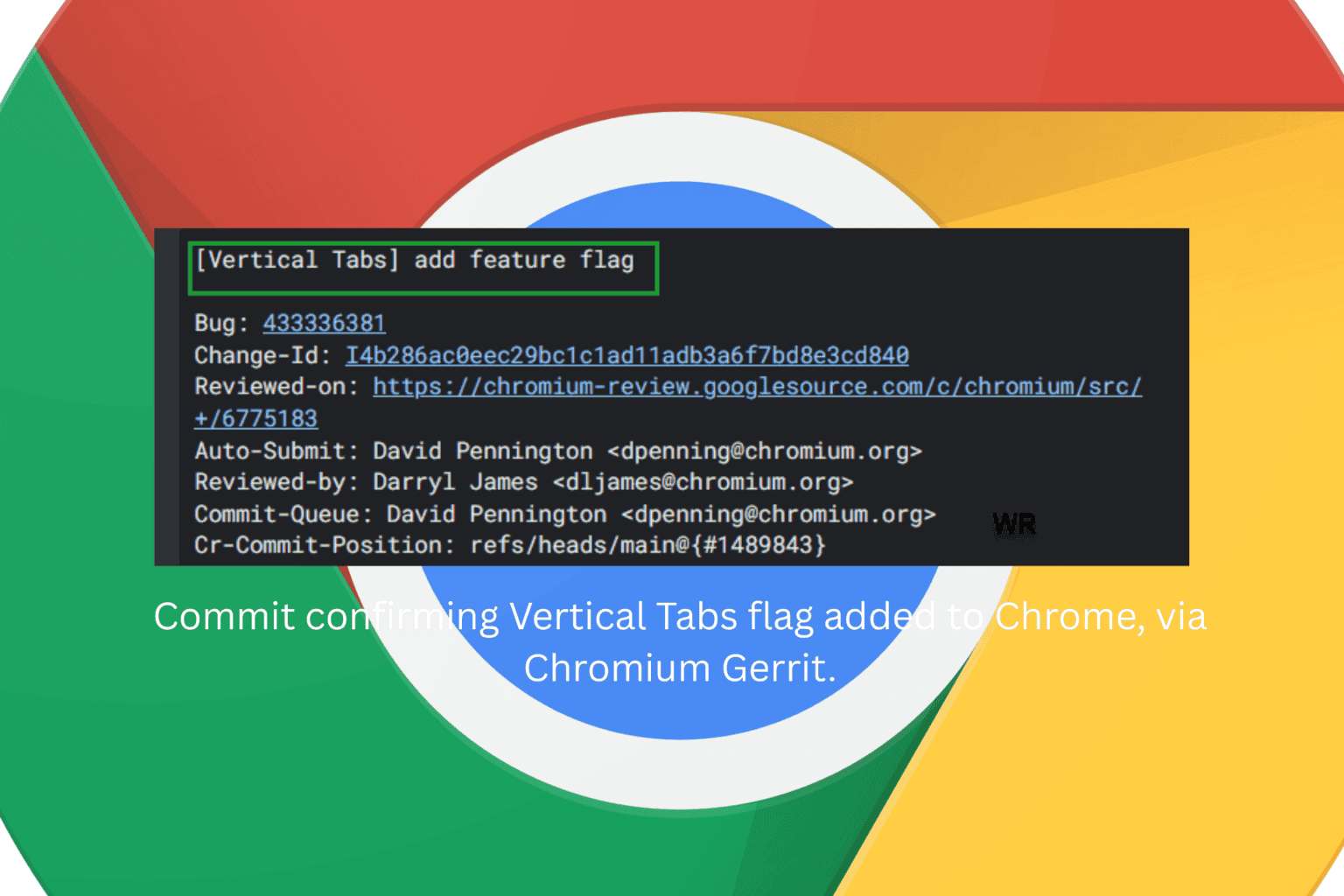
Google is finally adding the much-requested Vertical Tabs feature to the Chrome browser on desktop. The company has started working on the feature. It is adding a feature flag for vertical tabs for testing, spotted over the Chromium Gerrit.
The feature, already available in Microsoft Edge, Firefox, and Brave, seems to have put some pressure on Google to bring it to Chrome as well. The Vertical Tabs feature allows open tabs to be displayed in a sidebar on the left, instead of the traditional horizontal bar at the top of the window.
Vertical tabs help manage a large number of open tabs more easily, especially on widescreens. This layout enables clearer tab titles, improved organization, and faster access, particularly for users who open multiple tabs simultaneously.
The feature also often supports improvements like tab grouping, collapsing to save space, and context menus for better tab management.
Microsoft Edge was the first major browser to implement Vertical Tabs natively in March 2021. Vivaldi, Firefox, Brave, and newer browsers like Arc also support the feature. Surprisingly, the world’s most popular browser, Google Chrome, has lacked this feature. There has been consistent demand and plenty of requests from users to add Vertical Tabs to Chrome.
Until now, Chrome users had to rely on third-party extensions to get vertical tabs, unlike browsers like Edge and Vivaldi that offer the feature natively. That’s changing now, as Google has started development. A recent Chromium Gerrit commit confirms this:
“[Vertical Tabs] Add feature flag,” it reads.

Google is also preparing for internal tracking of the feature, as seen in this Chromium commit, which logs whether the user has vertical tabs enabled, both at startup and whenever the setting changes.
What’s next? The flag should soon appear among Chrome’s experimental features and can then be enabled for testing in Canary builds.
Since development has just begun, it’s too early to say what the final implementation will look like. For example, Chrome’s Split Screen feature is still under quiet development, and it’s unclear when it will reach the public.
When a popular browser like Edge introduces a significant feature, it often creates pressure on others. Firefox recently followed with its version, and now Google Chrome is joining the lineup of browsers offering vertical tabs.
It won’t be long before you see built-in Vertical Tabs in Chrome. If you’re an advanced user or early adopter, you’ll be able to test it in Canary soon and share feedback directly with Google.
Google experimented with vertical tabs a decade ago, shortly after Chrome’s initial release. Back in 2010, a “Side Tabs” Labs feature allowed users to move tabs to the left side of the window via the tab strip’s context menu. Google even cited the feature as useful for widescreen monitors.
That’s not all; Chrome is also testing a new feature to determine your location better when you open the browser. Additionally, it will block notifications from spammy sites you don’t interact with.