Chrome Will Soon Disable Notifications from Spammy Sites You Don’t Interact With
Readers help support Windows Report. We may get a commission if you buy through our links.

Read our disclosure page to find out how can you help Windows Report sustain the editorial team. Read more
Google is testing a new feature in Chrome Canary that automatically revokes notification permissions from websites that spam users and show little engagement.
This feature, available behind a flag, allows Chrome to automatically remove site notification permissions if a website sends a high volume of notifications and has a low engagement score (meaning the user doesn’t interact with the site frequently).
Chrome’s Safety Hub Disruptive Notification Revocation
If a website sends lots of notifications but you rarely engage with it, Chrome may automatically restrict permission to send you notifications.
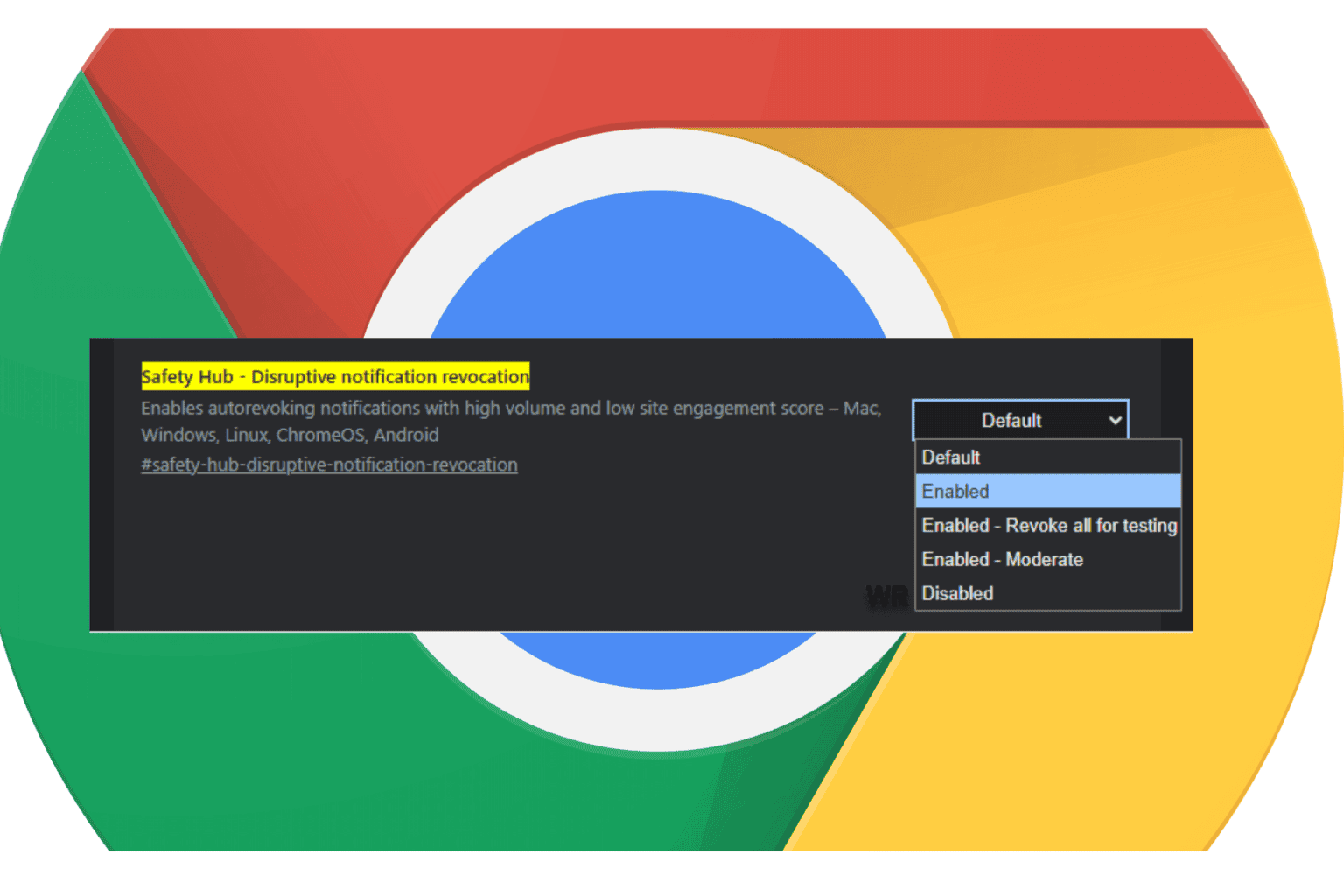
The flag, titled “Safety Hub – Disruptive Notification Revocation”, is currently available on Android, Mac, Windows, Linux, and ChromeOS. It reads:
Enables autorevoking notifications with high volume and low site engagement score

Google provides two modes for testers:
- Revoke All: Aggressively removes permissions from offending sites.
- Moderate: A less strict approach for those who want to test the feature

To see this feature in action, users must visit chrome://flags in Chrome Canary and choose the preferred option under the flag dropdown menu.
At first glance, this might sound familiar: Chrome already blocks abusive sites and suggests revoking unused permissions. However, what’s new is that this feature uses dynamic behavior, not just a fixed blacklist or manual user decision.
Chrome will now make automated decisions based on how a site behaves and how users engage with it (or don’t).
So far, Chrome has introduced Quiet UI for known abusive sites, Safe Browsing to block notification prompts from malicious domains, and Safety Hub reminders for unused permissions.
But it’s now going further, proactively revoking permissions for noisy, low-quality sites based on real-time signals.
For website owners, this raises the bar: sending too many notifications without genuine user interaction may automatically result in revoked permission access, possibly reducing their visibility and user reach.
Apart from this, Chrome on desktop is getting native HLS player support and Search AI Mode Prompt in the Android address bar.