Google DeepMind Workers Vote to Unionize Over Military AI Deals
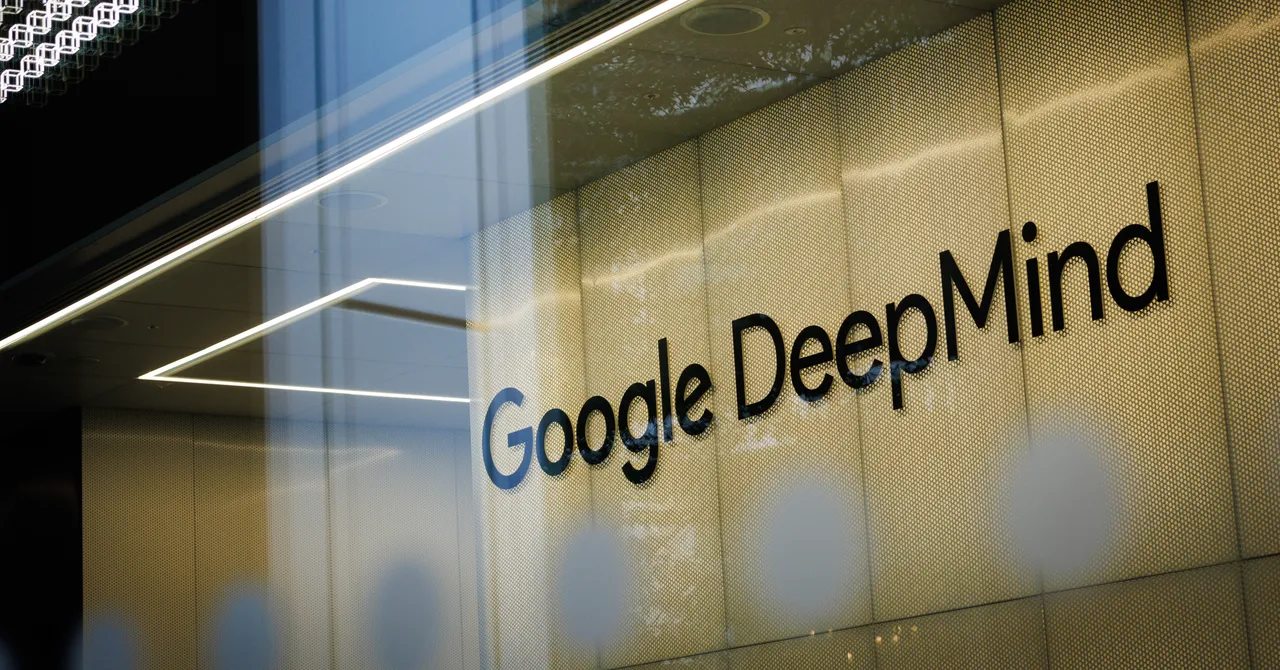
Employees at Google DeepMind in London have voted to unionize as part of a bid to block the AI lab from providing its technology to the US and Israeli militaries.
In a letter addressed to Google’s managing director for the UK and Ireland, Debbie Weinstein, the workers asked the company to recognize the Communication Workers Union and Unite the Union as joint representatives for DeepMind employees.
“Fundamentally, the push for unionization is about holding Google to its own ethical standards on AI, how they monetize it, what the products do, and who they work with,” John Chadfield, national officer for technology at the CWU, tells WIRED. “Through the process of unionization, workers are collectively in a much stronger place to put [demands] to an increasingly deaf management.”
The push to unionize began in February 2025, when Google’s parent company Alphabet removed a pledge not to use AI for purposes like weapons development and surveillance from its ethics guidelines, according to a DeepMind employee, who asked to remain anonymous for fear of retaliation.
“A lot of people here bought into the Google DeepMind tagline ‘to build AI responsibly to benefit humanity,’” the DeepMind employee told WIRED. “The direction of travel is to further militarization of the AI models we’re building here.”
Increasingly, that concern is reflected across the industry. In late February, staff at DeepMind and OpenAI signed an open letter in support of Anthropic, after the US Department of Defense sought to designate the lab a supply chain risk over its refusal to allow its AI to be used in autonomous weapons or for mass surveillance of US citizens. Last week, The New York Times reported that Google had entered into a deal allowing the Pentagon to use its AI for “any lawful government purpose.” (On Friday, the US Department of Defense confirmed that it had reached deals with seven leading AI companies—including Google, SpaceX, OpenAI, and Microsoft—to use their models on classified networks.) Roughly 600 US-based Google employees reportedly signed a letter protesting the deal. “We think the [any lawful purpose] clause is vague enough to be effectively meaningless,” the DeepMind employee says.
Google did not respond immediately to a request for comment. The company has previously defended its deals with government organizations. “We are proud to be part of a broad consortium of leading AI labs and technology and cloud companies providing AI services and infrastructure in support of national security,” Jenn Crider, a Google spokeswoman, told The New York Times last week. “We remain committed to the private and public sector consensus that AI should not be used for domestic mass surveillance or autonomous weaponry without appropriate human oversight.”
In 2021, Google employees in the US formed the Alphabet Workers Union. The union is not recognized by Alphabet for collective bargaining purposes, but has previously succeeded in negotiating agreements on behalf of Google contractors.
The DeepMind employee tells WIRED that if the staff succeeds in unionizing in the UK, they will likely demand that Google pulls out of its long-standing contract with the Israeli military, and seek greater transparency over how its AI products will be used, and some sort of assurance relating to layoffs made possible by automation.
If Google does not engage, the letter states, the employees will ask an arbitration committee to compel the company to recognize the unions.
Since the turn of the year, both Anthropic and OpenAI have announced large-scale expansions of their operations in London. CWU hopes the unionization effort at DeepMind will spur workers at those labs into similar action.
“These conversations are happening,” claims Chadfield. “The workers at other frontier labs have seen what Google DeepMind workers have done. They’ve come to us asking for help as well.”