
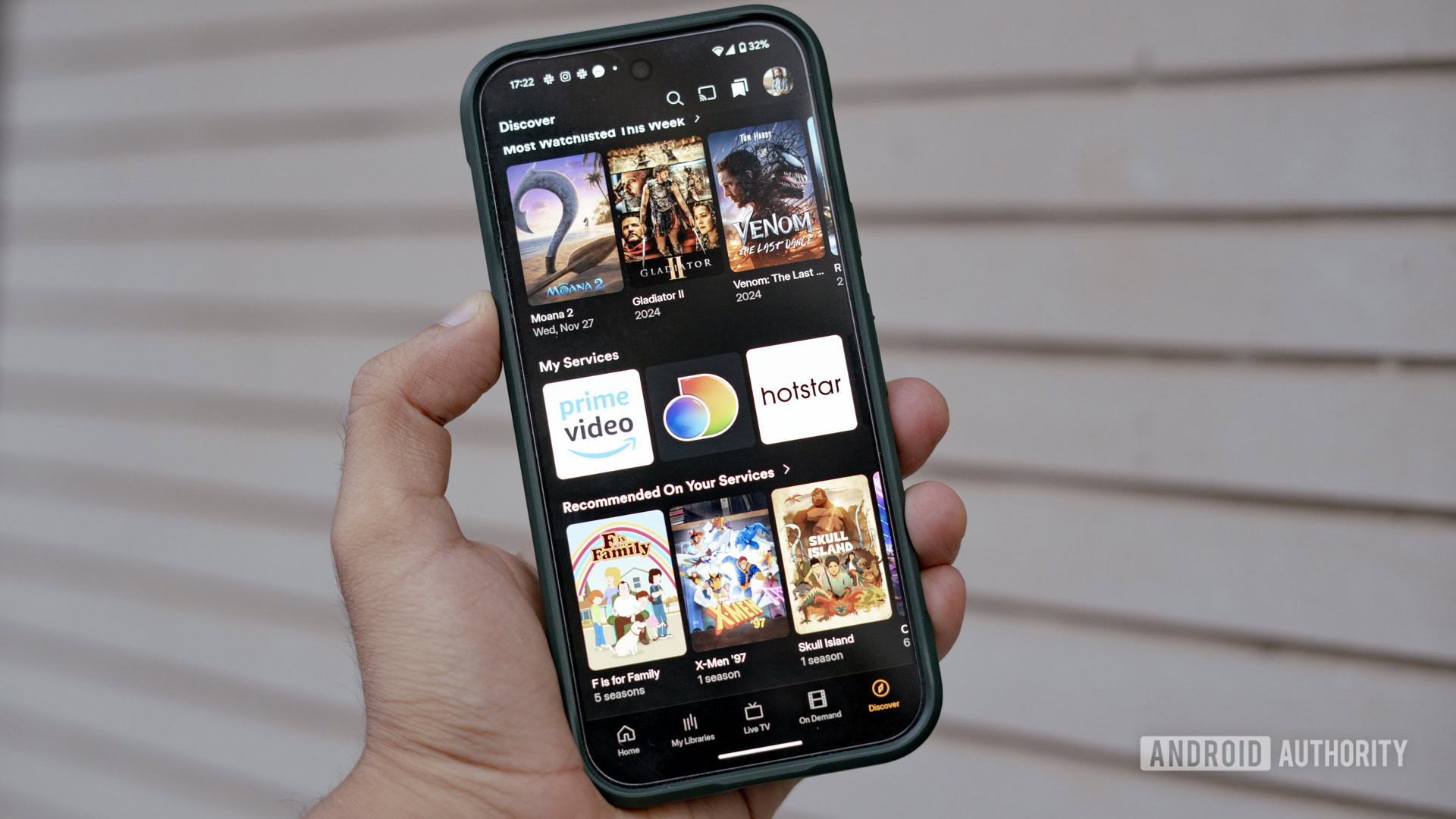
How to remote stream your Plex library for free (2026 guide)
Dhruv Bhutani / Android Authority
For years, Plex has been the ultimate go-to for media nerds like me who wanted to escape the fragmentation of streaming services. You can start with something as basic as a few hard drives, set up a server, and enjoy your library on any device. Or, you can go for a NAS or even a VPS to host your Plex server. There’s a lot of flexibility there.
However, the landscape shifted dramatically in 2025 with the introduction of the Remote Watch Pass, which fundamentally changed how remote streaming works for non-premium users. While a standard Plex Pass still grants you full access to advanced features like hardware transcoding and Skip Intro, the Remote Watch Pass is a cheaper, standalone subscription designed specifically to gate remote access for those who don’t want the full premium suite. And that Remote Pass is getting a lot more expensive. For a service that was once essentially free, the idea of spending $30 every year to stream my own media to my own devices using my own infrastructure rubs me the wrong way.
But the good news is that if you are tired of being nickel-and-dimed to access your own media, there are a few ways to bypass these fees and keep your library open. I’ve spent the last few weeks testing various workarounds to see which hold up well in real-world conditions. By leveraging a networking tool called Tailscale or switching to a specialized third-party client like Plezy, you can bypass these new restrictions entirely. Here’s everything you need to know, so you can get back to watching your movies without sneaking a peek at your bank account first.
Have Plex’s subscription changes made you consider leaving?
1 votes
Why Plex turned remote access into a paid feature

Dhruv Bhutani / Android Authority
Before we get around to getting around Plex’s remote streaming limitations, here’s what you need to know about how Plex tracks you. When you open the Plex app on your phone at the airport or in a hotel, it performs a handshake with Plex’s central servers. It checks your IP address against the IP address of your home server. If they do not match, Plex flags the session as a remote stream. In the past, this was a free feature, provided you had set up port forwarding on your router. Now, that handshake triggers a prompt to purchase the Remote Watch Pass.
Even with perfect port forwarding, Plex still wants to charge you for leaving the house.
Plex justifies this by pointing to the costs of maintaining its relay infrastructure. When a direct connection cannot be established, Plex routes your data through its own servers, which costs money in bandwidth. However, even with a perfect direct connection via port forwarding, this feature still requires the premium Plex Pass in 2026. It’s a fundamental shift in the company’s behavior toward long-time users and has predictably miffed the community.
Of course, while you can consider moving to Plex alternatives like Emby or Jellyfin, many, like me, are locked into the simplicity of Plex’s interface.
How to remote stream your Plex library for free using Tailscale

Dhruv Bhutani / Android Authority
The most effective way to bypass the Remote Watch Pass is to make your phone think it never left your house. This is achieved through a virtual private mesh network between your device and your home network. While traditional VPNs are designed to hide your location or let you browse the web anonymously, a mesh VPN like Tailscale connects your devices to each other regardless of where they are in the world. When you use Tailscale, your phone and your Plex server appear to exist on the same private network, essentially creating an encrypted connection between them. It’s a useful tool for practically anyone dabbling in self-hosting.
The easiest fix is making Plex think your phone never left home.
Tailscale is built on the WireGuard protocol, which is known for being incredibly fast and lightweight. This makes it ideal for streaming high-bitrate 4K video, unlike older VPN protocols, which can slow down your connection or drain your phone’s battery.
What makes Tailscale stand out is the fact that it can bypass complex networking issues like CGNAT. If you are using mobile internet or live in an apartment with shared connectivity, CGNAT is a persistent issue that prevents you from using traditional port forwarding. Tailscale solves this by creating a direct point-to-point connection between your devices without needing to touch your router settings. It also helps that getting started with Tailscale is much simpler than digging around your router settings.
The first step in this process is to install the Tailscale client on the machine that hosts your Plex Media Server. Tailscale provides official packages for Windows, macOS, Linux, and even specialized platforms such as Synology and TrueNAS. Once you install the app and sign in with your account, your server will be assigned a unique IP address. This is your permanent address within your private mesh network. It will never change, which makes it perfect for a media server.

Dhruv Bhutani / Android Authority
Once your server appears in the Tailscale dashboard, you need to configure Plex to recognize the new network. Open your Plex Web UI and navigate to the server settings. Under the Network tab, look for Advanced settings. You will see a field labeled LAN Networks. This is where you tell Plex which IP addresses to treat as local. You should enter 100.64.0.0/10 in this box.
By doing this, you are telling Plex that any device with a Tailscale IP address is officially part of your home network, effectively bypassing the remote access check. That’s all you need to change on the Plex server to stop the Remote Watch Pass prompt from appearing, since the server assumes all traffic is coming from the same location.
The fix is surprisingly simple. Just tell Plex that Tailscale belongs to your home network.
With the server side ready, your next step is to prepare your mobile device. Install the Tailscale app on your Android or iOS device, then log in with the same account. Once you toggle the switch to connect, your phone automatically connects to the VPN and behaves as if it were sitting within your home network.

Dhruv Bhutani / Android Authority
While that’s enough for most self-hosted tools to work, the official Plex app might still default to attempting remote streaming unless you nudge it in the right direction. Let’s fix that.
Open the Plex app on your phone, go to Settings> Advanced> Manual Connections. You will need to add a new connection here using the 100.x.x.x IP address of your server that you found in the Tailscale dashboard on the website. Set the port to 32400, which is the default for Plex.
By forcing a manual connection, you ensure that the app always prioritizes the Tailscale tunnel. This connection is encrypted, fast, and, most importantly, completely free of any remote streaming restrictions. That’s it — that’s all it takes to free yourself from the shackles of Plex’s paid remote streaming.
How to remote stream your Plex library for free using a third-party app

Dhruv Bhutani / Android Authority
If you’re not too fixated on using the default Plex app, or if you find the networking side of Tailscale a bit too complicated, there’s another way to use Plex’s remote streaming feature. As it turns out, the Remote Watch Pass is a restriction built into Plex’s software. It’s not a restriction inherent to the server itself. To bypass it, simply stop using the official Plex app. Because Plex offers an open API for media playback, third-party developers have created alternative apps that can connect to your library without enforcing paywalls.
Plex’s server isn’t the problem, the official app is.
My current favorite option is an open-source app called Plezy. It’s an open-source media player that focuses entirely on bringing playback to the forefront, without much of the cruft that Plex has accumulated over the years. The interface is clean and easy to follow along, and the app connects directly to your server and starts playing your files immediately.
While remote streaming might be your top reason to switch apps, Plezy offers enough incentives to consider it as a better Plex client. The official Plex app uses a variety of different players depending on the platform, which often leads to the dreaded “The server is not powerful enough to transcode this video” error message. This happens because the app cannot natively play the file format, so it asks your server to convert it on the fly.

Dhruv Bhutani / Android Authority
Plezy uses the MPV engine, widely considered one of the best video renderers. It includes built-in support for almost every codec in existence, including AV1, HEVC, and high-level H.264 profiles.
It also handles complex subtitle formats without breaking a sweat. So, when you use Plezy, your server almost never has to transcode. It simply sends the raw file to your phone, and Plezy handles the heavy lifting. This saves your server’s CPU from working overtime, which matters a lot when you are hosting the server on a low-powered SBC or NAS. Additionally, it ensures you get the highest possible image quality, even over a remote connection.
Plezy plays the file your server already has instead of making your NAS work overtime to transcode the stream.
Beyond bypassing the Remote Watch Pass, Plezy also unlocks features that Plex usually reserves for its Plex Pass subscribers. For example, offline downloads are a standard feature in Plezy. You can select a movie or a few episodes of a show and download them directly to your phone’s storage for a long flight. In the official app, this would require a monthly subscription.
Plezy also includes native support for skipping intros and credits. As long as your server has already analyzed the files and created the markers, Plezy will show a button to skip right to the action. It even supports custom themes and advanced audio configurations that are often locked or limited in the official ecosystem. For a free app, it provides a significantly more “premium” experience than the software it is designed to replace.
As I mentioned earlier, if you’re not married to the idea of using the default app, getting started with Plezy is easy. The most common targets are listed on the GitHub page. For Android users, the process is easy. If you don’t mind paying a small fee, you can download the app from the Play Store. If not, you can head over to the Plezy GitHub repository to download the latest APK. Once you enable the permission to install apps from unknown sources in your phone’s settings, you can install it in seconds.
For iOS users, the situation is a bit more complex but still very manageable. The easiest approach would be to pay for the app on the App Store. However, you can also find Plezy on TestFlight, which is Apple’s official beta testing platform. Additionally, if you are comfortable with sideloading apps, the developer has provided the app installation file on the GitHub page to download. Similarly, apps for macOS and Windows are also available to download straight from GitHub.
Choosing between convenience, control, and privacy

Dhruv Bhutani / Android Authority
When deciding which method to use, you should consider how much you value the official Plex interface. If you love the “Discover” features, the official watchlists, and how Plex integrates with other streaming services, then the Tailscale method is your best bet. It allows you to keep using the official app while simply fixing the underlying networking issue that causes the paywall to appear. On the other hand, if you are a minimalist who just wants to play your files with the best possible quality, Plezy is the clear winner. The app is faster to navigate, handles complex files with ease, and offers most pro features for free.
Choose Tailscale if you love the Plex app experience. Choose Plezy if you just want your files to play seamlessly.
There is also a privacy component to consider when choosing these workarounds. When you use the official Plex app for remote streaming, every bit of data about what you are watching is reported back to Plex’s central servers. This is how it generates your “Wrapped” year-end reviews and suggests new content.
Using Tailscale adds a layer of privacy because your traffic is entirely contained within your own encrypted tunnel. Plex still knows what you are playing because the server software reports it, but the actual data stream is hidden from your ISP and any public Wi-Fi providers. If you combine Tailscale with a third-party client like Plezy, you significantly reduce the amount of telemetry sent back to Plex, which you may or may not be concerned about.
Taking back control of your Plex remote streaming

Dhruv Bhutani / Android Authority
The shift toward subscription overload and monetization in the self-hosting space is a reminder that even the best software can change over time. Plex was once the darling of the community, but its current focus on recurring revenue has forced many users to look for an exit.
These workarounds are not just about saving a few dollars every month. I am a Plex Pass lifetime subscriber and have no issues with paying for a service I use practically every day. However, I’m not a fan of the direction that the company is taking.
With Plex’s recurring fee constantly going up and its service standards not only dropping but also shifting toward features I don’t really care about, it’s more about the principle of things. If you have spent hundreds of dollars on hard drives and thousands of hours curating a media library, you should not have to pay a recurring subscription fee to access it from a different zip code.
Both the methods we’ve talked about are reliable, relatively easy to set up, and, honestly, provide a better experience than the stock remote access system. The next time you are away from home and want to dive into your movie collection, you can do so with the confidence that you are not being tracked or charged for the privilege.
Don’t want to miss the best from Android Authority?


Thank you for being part of our community. Read our Comment Policy before posting.


