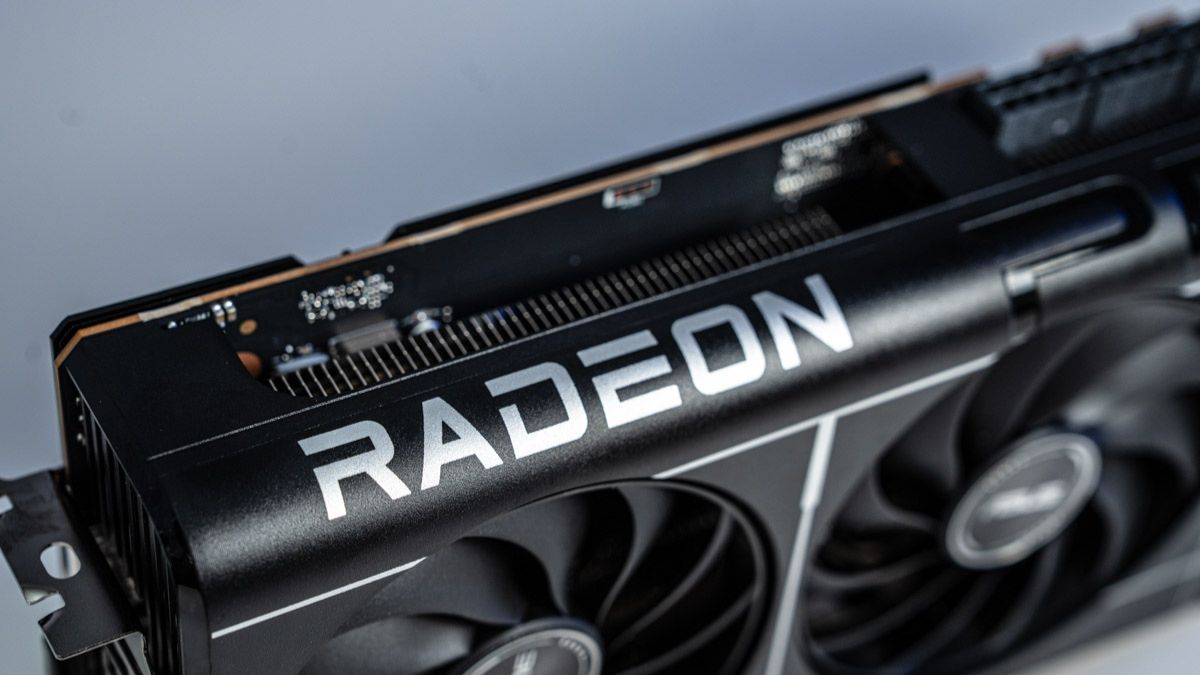
New benchmarks make it clear why you should buy a 16GB graphics card over the cheaper 8GB model
A new set of benchmarks confirms what many gamers have been suspecting: 16GB of VRAM in your graphics card makes a much bigger difference in 2025 than it did a few years ago. Benchmarks from PC Games Hardware comparing 16GB and 8GB versions of the same GPU show a clear gap in performance.
We already saw how 8GB cards were struggling in games like Indiana Jones and the Great Circle, DOOM: The Dark Ages, and The Last of Us Part 2. These tests further confirm it, particularly with demanding settings like ray tracing turned on. 16GB models also benefit from AI techniques such as upscaling and frame generation.
16GB vs 8GB – the difference is clear
The tests focused on the Radeon RX 9060 XT, available in both 8GB and 16GB. Despite having the same processing power, the performance gap was clear. At 1080p with maximum settings, the 8GB card often struggled. Games like Dragon Age: The Veilguard, Forza Motorsport, Stalker 2, Spider-Man 2, and Wreckfest 2 ran poorly on the 8GB version, with severe frame rate drops. Meanwhile, the 16GB card handled them with ease, offering a much smoother experience.
| 1080p (average FPS) | 1080p (1% lows) | |
|---|---|---|
| RX 9060 XT 16GB vs 8GB @ Max settings | -22.8% | -25.8% |
| RX 9060 XT 16GB vs 8GB @ High settings | -12.4% | -13.3% |
In the table above, 3DCenter further condensed the benchmarks to reveal the difference between the 16GB and 8GB cards at two different setting presets across 15 titles. The ‘Max’ settings occasionally include ray tracing, while the ‘High’ settings do not.
Prime Day may have closed its doors, but that hasn’t stopped great deals from landing on the web’s biggest online retailer. Here are all the best last chance savings from this year’s Prime event.
*Prices and savings subject to change. Click through to get the current prices.
The gap widened even further at 1440p with upscaling and frame generation enabled. These can boost frame rates significantly, but also consume more VRAM. In this scenario, the 8GB card fell behind sharply, while the 16GB version stayed consistent in performance.
When the settings were dropped from maximum to high, the 8GB version performed noticeably better, closing the gap with the 16GB model in some games. In fact, in titles like Star Wars Outlaws and Kingdom Come: Deliverance 2, performance was almost the same. However, the majority of games still ran more smoothly on the 16GB version, showing that even with reduced detail and no ray tracing, memory limits remained a problem.
8GB still worth it?
For a long time, 8GB graphics cards were considered enough for most PC gamers, especially for those playing at 1080p. But modern game engines are far more demanding. Games now load huge amounts of textures, effects, and assets into VRAM, and when a card doesn’t have enough, the system struggles, which causes frame drops, stuttering, and in some cases, lower visual quality as the game tries to prioritize smooth frame rates over detail.
The benchmarks make one thing very clear: 8GB graphics cards are no longer enough for some modern AAA games in 2025. While they can still handle older or less demanding titles, newer releases are quickly pushing past their limits. The 8GB version may seem like a decent option for budget-conscious builders, but investing in the 16GB model would be a better idea if you want a future-proof setup.