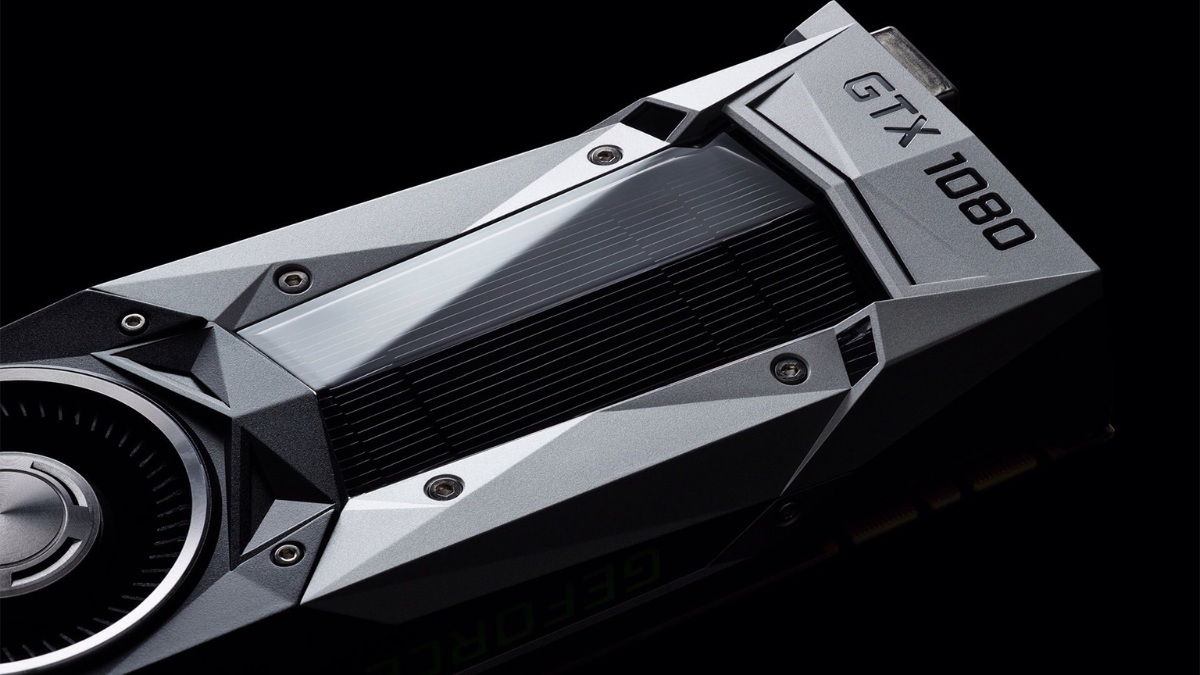
Nvidia CEO Jensen Huang says the GTX 1080 is “one of my favorites” and a GPU that “changed everything”
The GeForce GTX 1080 (and its bigger sibling, the 1080 Ti) remains one of Nvidia’s most memorable graphics cards, and it seems Nvidia CEO Jensen Huang feels the same way. During a recent appearance at Computex 2026 in Taiwan, Huang was seen meeting fans, signing autographs, and taking photos.
One of those interactions involved a GTX 1080 Founders Edition graphics card, which led to an interesting comment from the Nvidia boss. After being handed the card to sign, Huang called it one of his favorites, “one of the best,” before saying that it “changed everything.” While it was a brief moment, we imagine many PC gamers would agree with such a statement.
Jensen Huang signs a GTX 1080 at Computex 2026
The GTX 1080 launched in May 2016 and was the first gaming GPU based on Nvidia’s Pascal architecture. At the time, it represented a major leap in performance over the Maxwell generation that came before it. The card featured 8GB of GDDR5X memory and 2,560 CUDA cores, delivering high-end gaming performance that helped push 1440p and even 4K gaming further into the mainstream.
More importantly, Pascal arrived during a period when graphics card pricing looked very different from today. The GTX 1080 Founders Edition launched for $699, while partner cards started at $599. For many gamers, the performance jump made it one of the most attractive GPU upgrades available at the time.
Nvidia followed it up with the GTX 1080 Ti in March 2017, a graphics card that many enthusiasts still consider one of the best value high-end GPUs ever released. It delivered performance extremely close to Nvidia’s much more expensive Titan X Pascal while launching at a significantly lower price. In addition to that, its 11GB of VRAM is still higher than many modern GPUs.
For many PC gamers, the Pascal generation represented a turning point. It was the final GeForce generation before Nvidia introduced dedicated ray tracing and AI acceleration hardware through the RTX lineup. The RTX 20 series would eventually bring technologies such as DLSS and real-time ray tracing, but it also marked the beginning of a new era of AI-accelerated GPUs.